The Museum



Georgios Papanikolaou is remembered for his scientific contribution and his lifelong dedication to helping humanity. He is the world-renowned doctor from Kymi, a small town in Evia, who continues to save women worldwide with his pioneering cytological diagnostic method known as the “Pap smear” or “Pap test.” This was an innovation he never patented or sold but offered freely to humanity.
Georgios Papanikolaou was born in Kymi, Evia in 1883, where he spent his childhood until the age of 11. He continued his secondary education in Athens and entered the Medical School at the age of 15, graduating with top honors. He then returned to Kymi to seek his father’s consent to continue his studies abroad. In 1907, he completed postgraduate studies in Germany, and in 1910 he presented his original thesis “On the Conditions of Sex Differentiation in Daphnids,” earning a doctorate from the Faculty of Natural Sciences at the University of Munich.
After returning to Greece, he met Andromachi Mavrogenous, whom he later married. He also participated in the turbulent times for Greece, serving in the Balkan Wars of 1912 and in World War I.
After the war, he and his wife emigrated to the United States. Their arrival in New York in 1913 brought serious living challenges, but also major successes for the great Greek doctor, such as working at the New York Hospital and conducting research to detect cervical cancer — work in which his wife also participated. His biography notes that Georgios Papanikolaou and his wife Andromachi (Machi) Mavrogenous faced significant financial hardship during their early years in America. They both worked in a department store — he selling carpets and she sewing buttons — for just five dollars a week.
Their situation improved when Papanikolaou was appointed assistant at the Pathology Department of New York Hospital, thanks to the intervention of the famous Columbia University geneticist T.H. Morgan.
Throughout his life, Papanikolaou demonstrated perseverance and patience in achieving his goals and dreams. His experimental research focused on: the endocrinology of reproduction, adolescent and gynecological endocrinology — fields which later became central to cancer prevention. The pinnacle of his writing career was the publication of the “Atlas of Exfoliative Cytology.”
Among his many scientific achievements, a key date is March 11, 1941, when he presented his paper on the diagnostic value of vaginal smears for carcinoma of the uterus. He also authored the famous monograph “Diagnosis of Uterine Cancer by the Vaginal Smear (Pap Test),” followed by other important publications and distinctions.
Both Cornell University, where he developed his research and worked for nearly half a century, and numerous American organizations — such as the American Academy of Arts and Sciences, the Association of American Medical Colleges, and the American Cancer Society — honored him with awards. The Medical School of the University of Athens granted him an honorary doctorate in 1949, and the Academy of Athens unanimously named him an honorary member in 1957. After his death, he was also honored with an award by the United Nations.
This impressive and globally beneficial life came to a close on February 19, 1962.
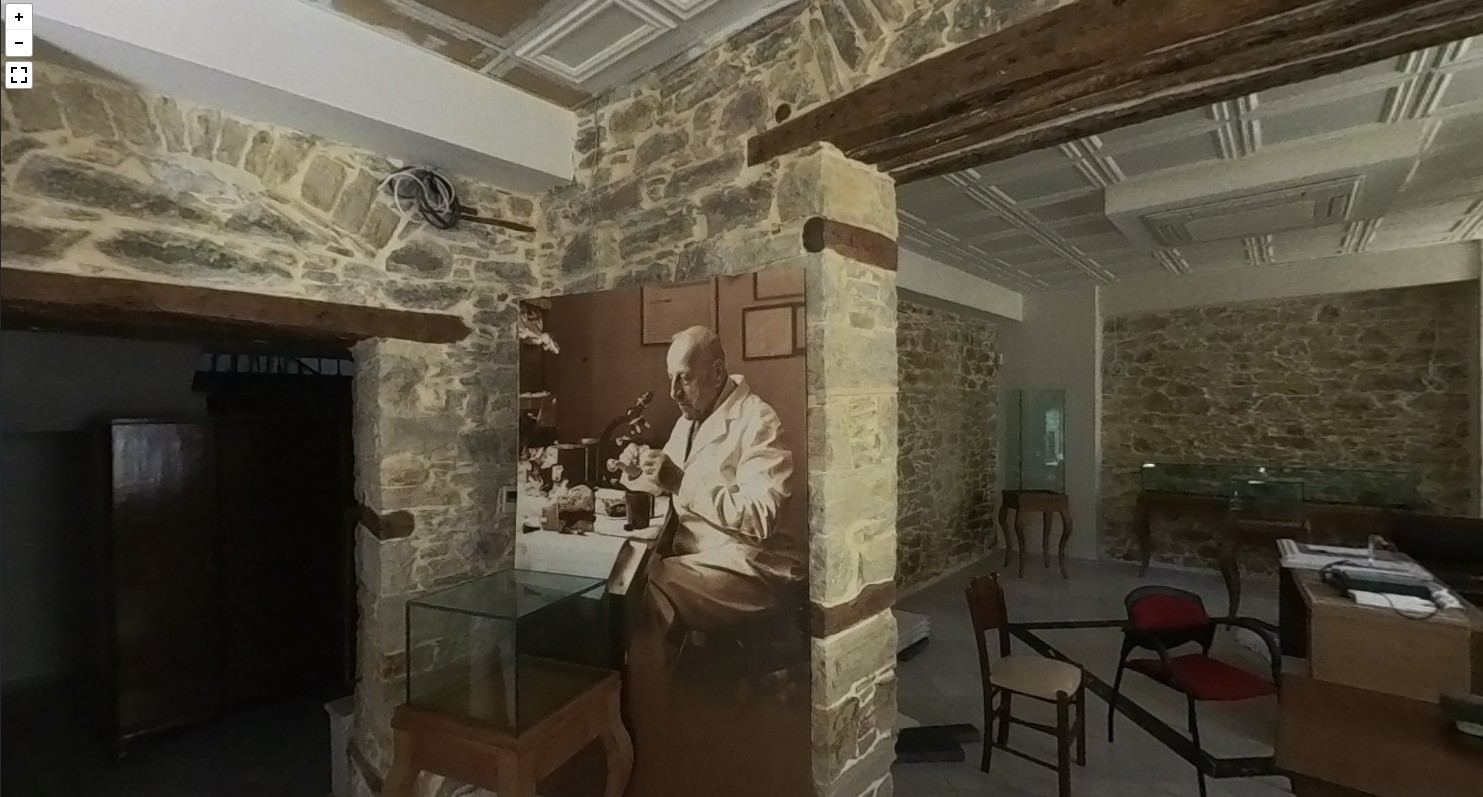
At the “Papanikolaou Museum,” his life journey, scientific work, personality, interests, and unique qualities that made him stand out are showcased. His parental home has been transformed into a museum that presents the Greek researcher both as a Scientist and as a Human Being.
The founding of the museum is more essential now than ever, given the public health challenges we have faced. The continuous research and efforts by modern scientists during these difficult times reflect their desire to serve humanity, dedicating their lives to science — just like the great Greek scientist Georgios Papanikolaou.
Highlighting unknown aspects of his life through the museum exhibition provides significant motivation to young people to remain committed to their goals through continuous and systematic effort.
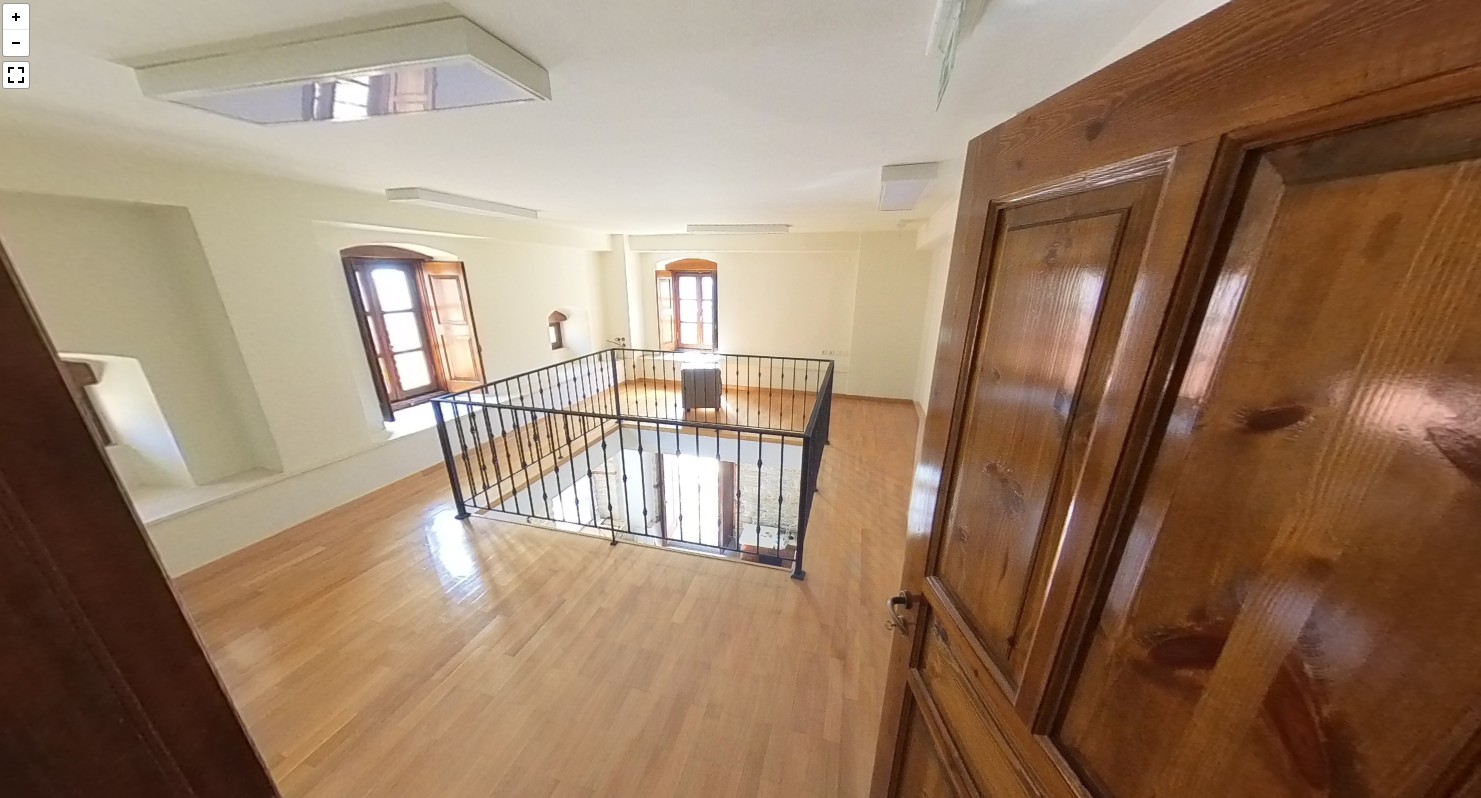
Thanks to a sequence of suitable actions and initiatives, a museum has been created with a recognizable identity, worthy of the values and principles the great researcher embodied. The “Georgios Papanikolaou Museum” of the Municipality of Kymi-Aliveri is housed in a traditional architectural building that was recently renovated and spans three levels. The ground floor features an exhibition space and an educational program hall. The first floor, which is also the main entrance to Papanikolaou’s parental home, includes the reception area, exhibition spaces, and auxiliary rooms. Finally, the second floor houses the museum’s event hall and a space for temporary exhibitions.
The “Georgios Papanikolaou” Museum is one of the most important cultural institutions in Euboea, with both national and international reach. It brings together information, personal belongings, and scientific works of the great Greek researcher. The Museum also hosts scientific seminars, events, and conferences throughout the year.
The creation of this modern biographical museum, dedicated to the life and work of Georgios Papanikolaou, was an urgent necessity — allowing for the first-time public exhibition of numerous items and family heirlooms from the Papanikolaou family.
The use of technology within the museum environment represents a modern approach, aiming to strike a balance between physical exhibits, personal artifacts, and interpretive tools based on digital technology.
In addition to physical objects, the exhibition includes digital applications designed to showcase lesser-known aspects of Georgios Papanikolaou’s life in an original way — such as testimonies, memories, and family events from daily life that are not widely known to the public.